
Camp County VINELink Coverage
The Camp County Sheriff's own page directs the public to Texas VINE through VINELink. That makes it the county's confirmed online custody channel. VINE can carry agency-reported events such as release, transfer, escape, or death and can send alerts to registered destinations. It is not a permanent Camp release archive and is not the authoritative historical database for a TDCJ sentence.
For a Camp County Jail stay, use VINE and the Sheriff. For a TDCJ prison or parole matter, use the TDCJ offender search, Board or Parole Division, and IVSS. Federal prison belongs in the BOP locator. Immigration detention belongs in ICE ODLS. A county event can end because another custodian received the person, so “released by Camp” does not always mean free in the community.
Check a Camp Inmate on VINELink
Use more than a name whenever the result supplies enough detail. A similar name is not enough to combine two custody histories. Note when the search was run because an interactive status can change.
- Open VINELink and choose Texas.
- Select the offender or custody search and enter the available name or offender identifier.
- Compare the facility, identifier, and identifying details across possible matches.
- Open the correct Camp record and copy the status and event time exactly as displayed.
- If release appears, call the Camp County Sheriff at 903-856-6651. Ask whether the event was community release or transfer and whether another hold remained.
The Texas VINELink entry is the correct state starting screen.
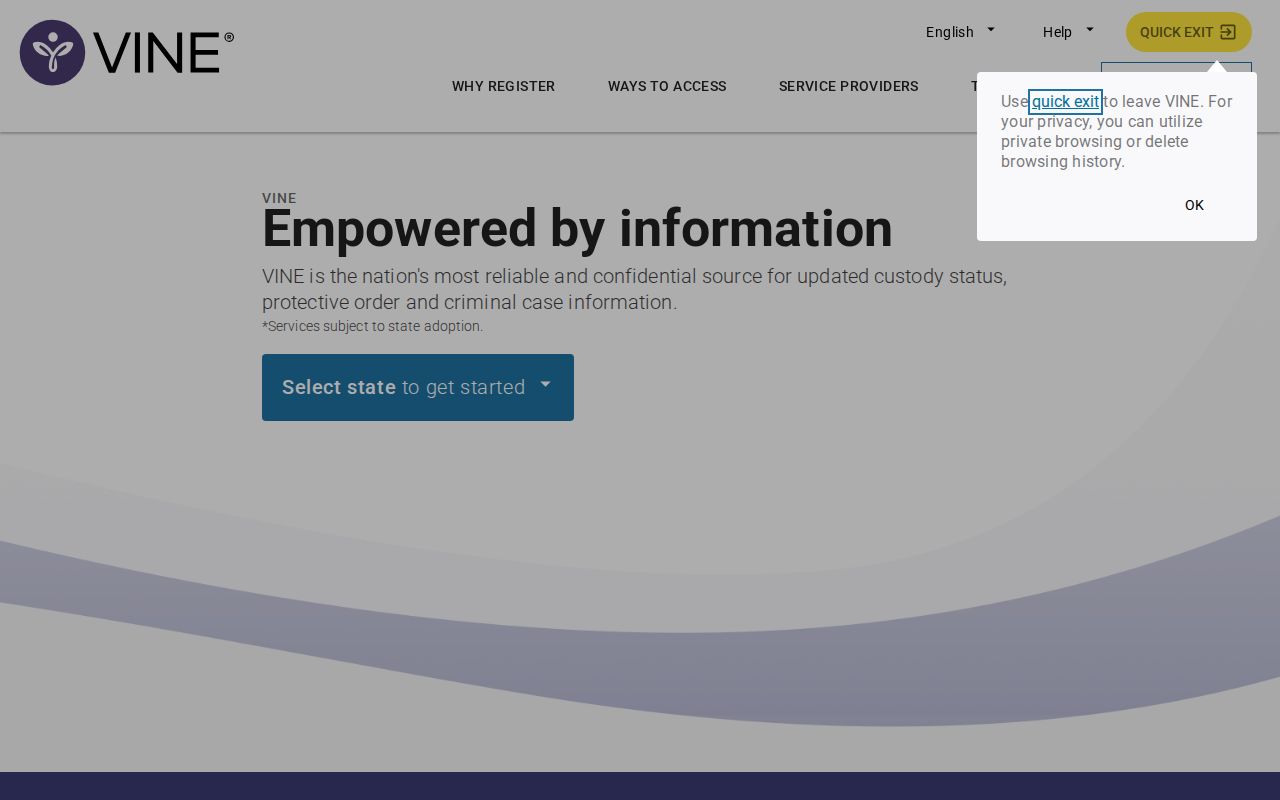
The captured entry screen shows the state selection that keeps the Camp County search in the proper reporting network.
Camp VINELink Release Fields
Record what the service actually labels. Do not convert a custody change into a legal conclusion. A county event timestamp can support a prompt call, while the Sheriff's book-out record remains the stronger source for the exact release code or receiving agency.
| Displayed item | How to use it |
|---|---|
| Name and identifier | Reduce same-name risk and preserve the matched record |
| Reporting agency or facility | Shows which custodian supplied the event |
| Custody status | Reports the agency's current transmitted status |
| Event type and time | Supports a follow-up about release, transfer, or another change |
| Notification option | Registers contact destinations while available |
A VINE release result is not a TDCJ release certificate, court disposition, or proof that all holds cleared. If Camp transferred the person to TDCJ, wait for state processing and search by TDCJ or SID number. If an ICE handoff is possible, use ODLS promptly.
Register for Camp Release Alerts
Register while the matching person is in custody. Texas VINE supports confidential destinations described in the Attorney General brochure. The phone PIN acknowledges a message; it does not independently prove release.
- Open the correctly matched Camp custody record.
- Choose registration or notification and add a phone number and/or email destination.
- For phone calls, create a four-digit PIN and keep it available.
- When the automated call arrives, listen and enter the PIN followed by the pound sign.
- If the PIN is forgotten, call 877-894-8463 and press 0 for operator help with reset or cancellation.
Unacknowledged calls can repeat for up to 48 hours. A message may be left when no one answers. After any alert, note the wording and time, search again, and call the Sheriff before deciding whether the person entered the community.
The VINELink notification screen combines result review and registration.
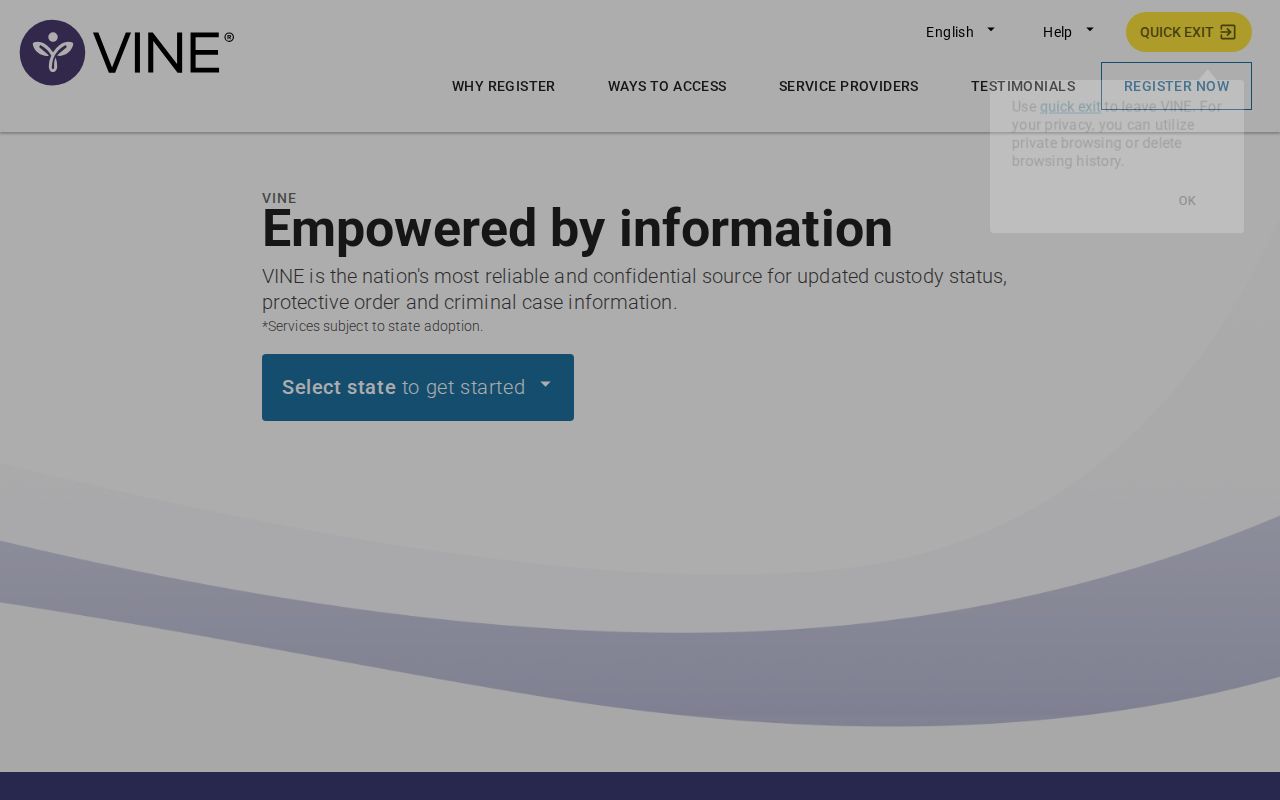
The captured workflow supports registering against the matched record rather than against a name-only guess.
Confirm Camp VINELink Release Alerts
Call the Camp County Sheriff with the person's full name, birth date if known, and approximate booking date. Ask whether the person is still held for Camp, physically housed at 203 Tapp Street or elsewhere, booked out, transferred, or released to the community. Ask whether the entry is final and whether staff can identify a receiving agency or remaining hold. Camp budgets for out-of-county housing, so physical location cannot be assumed.
If exact proof matters, request the booking sheet, book-in and book-out times, release code and existing code key, bond notation, and receiving-agency field. Camp has not published a set fee, turnaround, or web retention period. The County Clerk handles county-level records, while the District Clerk is the district and felony route. A docket can explain bond or disposition but may not show the minute of physical release.
Why Camp County Uses VINELink
Camp County does not publish an official live jail roster, released tab, or rolling release list. The Sheriff instead points visitors to VINELink. That local referral makes VINE the practical first check for a recent event, but not a date-range archive of every person who left the jail. An older event is better reconstructed through a narrow Sheriff records request and the correct Camp court file.
The Attorney General's VINE material adds the actionable phone and email registration details: a four-digit PIN, PIN plus pound acknowledgment, repeated calls for up to 48 hours, and operator help through 877-894-8463. Those steps are useful only after the correct person and Camp record have been matched.
Note: No Camp Sheriff release-notification app was found; VINELink is the official digital custody channel documented by the county.
Camp VINE vs TDCJ IVSS
County VINE and the TDCJ Integrated Victim Services System cover different stages. A routine Camp bond release belongs to the jail, VINE, and Sheriff confirmation chain. A state-prison release, parole eligibility event, Board decision, discharge date, or return to TDCJ custody belongs to state channels and IVSS.
| Situation | Notification and verification path |
|---|---|
| Camp Jail release or transfer | VINELink, Sheriff phone, Camp book-out record |
| Camp-to-TDCJ transfer | Camp VINE first, then TDCJ search and IVSS after state intake |
| TDCJ parole or discharge | TDCJ search, Board or Parole Division, IVSS |
| Federal prison | BOP locator and federal records, not VINE |
| Immigration custody | ICE ODLS and ICE information line |
IVSS permits account creation, offender-status search, and confidential notifications for eligible participants and concerned citizens. Delivery may include email, letter, text, or phone. Its contact is 800-848-4284 and victim.svc@tdcj.texas.gov. If Camp transfers someone into TDCJ, both systems may be needed in time order.
After a Camp Release Alert
Write down the alert's exact words and time before searching again. Then ask the Sheriff whether the reported event means a book-out to the community, an out-of-county move, a TDCJ transfer, an ICE handoff, or release followed by another hold. If the person was housed elsewhere for Camp County, identify both the county authority and the physical custodian. The agency that maintains the final book-out field may be the best source for the precise time.
Next, review the court record. A bond entry means release pending the case, not dismissal. A judgment may explain the sentence yet omit the minute when someone left the jail. If Camp names TDCJ as the receiver, wait for state intake and use the state identifier. A missing state result right after transfer can reflect processing rather than release. If ICE received the person, search ODLS promptly because ICE's released-person history is limited.
For a durable Camp record, make a narrow Chapter 552 request. Supply the full name, known birth date, booking date range, and any booking or cause number. Ask for the booking sheet, book-out timestamp, release code, existing code key, bond notation, receiving-agency field, and other specified release entries. A focused request reduces same-name risk. Camp publishes no fixed request fee, response time, or retention period, so none should be inferred from VINE.
No Camp VINELink Result
No result is not proof of release. Check spelling, name variants, identifiers, and whether Camp is the county of custody rather than only the county of conviction. Ask the Sheriff about out-of-county housing and recent transfers. For an older event, use the Sheriff record and court case because VINELink is built around custody events and notifications, not a permanent release archive.
If the custody type was mistaken, change systems. Use the TDCJ inmate-information email when a discharged state record is thin. Use BOP for a federal sentence after 1982 and read “RELEASED” as exit from BOP, not proof that federal supervision or another hold ended. Use ICE ODLS for immigration detention. A set of empty search screens does not establish that a person was released.
Camp VINE Phone Alert Details
The four-digit PIN is tied to acknowledgment of a phone notice. When the automated call arrives, listen to the message before entering the PIN and pound sign. That response tells the system the notice was received and stops repeat calls for that event. If no one answers, VINE may leave a message and keep trying until acknowledgment or the stated retry period ends. An operator at 877-894-8463 can help with a forgotten PIN, reset, or cancellation after the caller presses 0.
Use a contact destination that can receive the alert, but never share the PIN as if it were an offender identifier. It verifies message receipt, not identity, release authority, or clearance of other holds. Multiple phone or email destinations can be useful when allowed by the registration workflow. Each destination still points back to the same agency-reported event and requires the same Sheriff confirmation.
When a notification arrives, avoid calling only the listed facility if Camp has housed the person out of county. Start with the Camp Sheriff to identify the responsible booking and current physical custodian. Then ask the second facility whether it performed the final book-out. This two-agency check distinguishes a transfer between jails from release to the community.
What Camp VINE Events Mean
A release event says the reporting agency transmitted a change under its own custody record. A transfer event says custody moved, not ended. Escape and death are custody-ending or status events of a different kind and must not be described as community release. Preserve the service's exact term rather than replacing it with “free,” “discharged,” or “case closed.”
Court and custody records answer separate questions. The court docket can show a bond order, dismissal, judgment, sentence, or later warrant. The Sheriff record supplies the book-out time, release code, and possible receiver. TDCJ supplies state-prison status and sentence dates. Combining those sources makes the result clearer without asking VINELink to prove facts outside its role.
Registry Is Not Camp VINE
The Texas Public Sex Offender Registry is a narrow source for people with a Chapter 62 registration duty. It may show a photo, qualifying conviction, punishment, and supervision-related details. It cannot prove general release from Camp County Jail, and an absent result says nothing about an ordinary detainee.
The Texas registry search illustrates this separate scope.
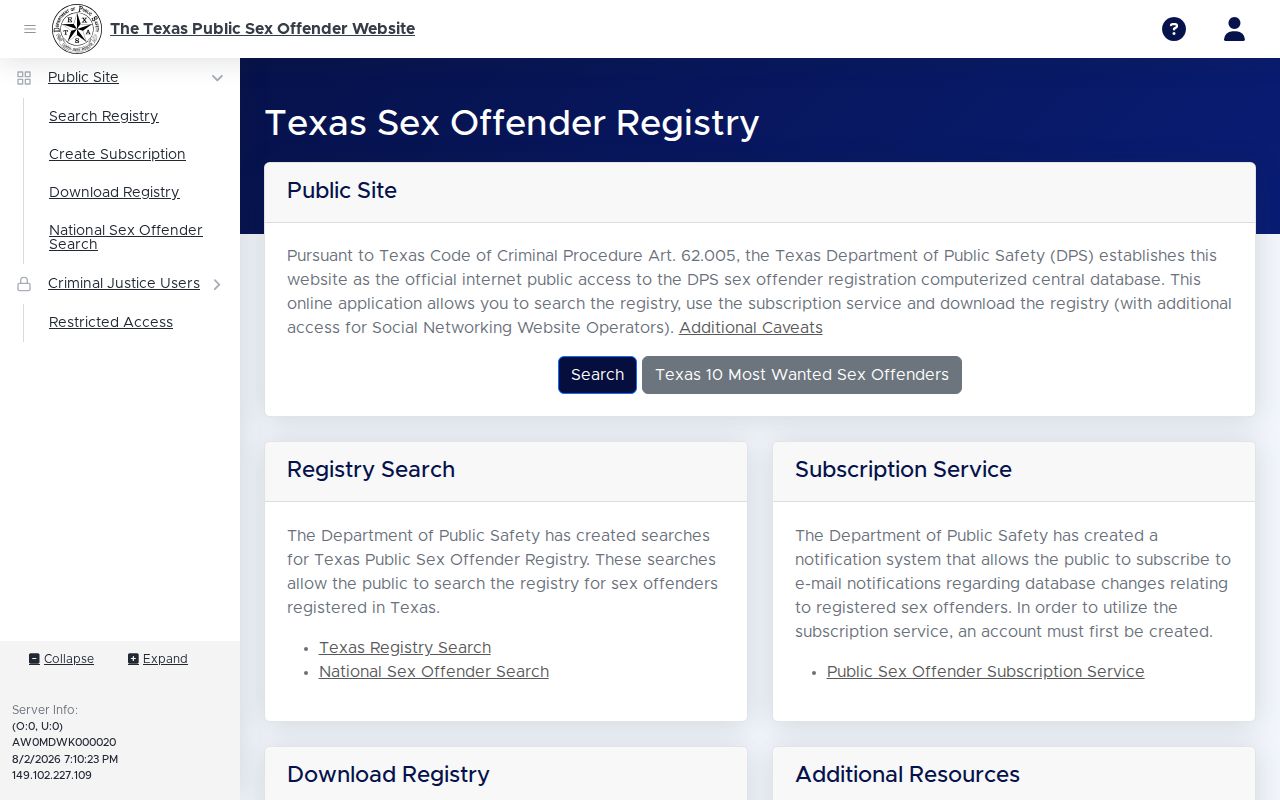
The captured registry form belongs only to qualifying registrants and should never replace a Camp County VINE check.
Public Record Search
Sponsored Results